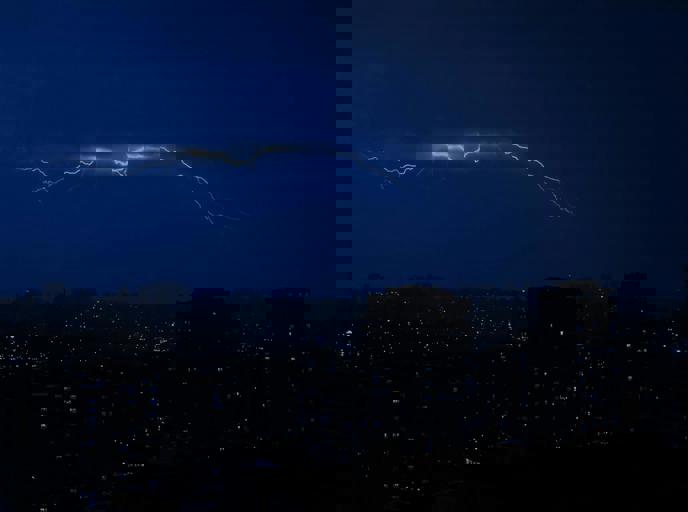
A sudden and ferocious storm swept through residential areas last night, plunging thousands of homes into darkness as high winds and torrential rain battered multiple neighborhoods. Local authorities reported that the intense weather event struck swiftly, catching many residents off guard as power lines snapped under the weight of falling trees and flying debris. Emergency crews began receiving calls for assistance within minutes of the storm’s arrival, underscoring the severe impact it had on the community.
According to the regional utility provider, upwards of 35,000 households were left without electricity at the storm’s peak. The company, which described the outage as one of the most significant in recent memory, quickly mobilized repair teams to assess the widespread damage. Spokesperson Daniel Lemieux explained, “We are doing everything we can to restore power as swiftly and safely as possible, but the scope of the damage is extensive.”
Residents recalled the chaos that ensued as the storm intensified. “The wind sounded like a freight train, and then suddenly, everything went pitch black,” said local homeowner Kimberly Stewart. “Within minutes, branches were hitting the house, and we could hear transformers popping. It was terrifying.” Stewart and her family huddled in their basement, relying on flashlights and battery-powered radios for updates as the storm raged outside.
Emergency services were quickly stretched thin as calls poured in reporting downed trees, blocked roads, and concerns for vulnerable individuals. Firefighters and police worked alongside public works employees through the night to clear debris and assist those trapped in their homes or vehicles. Paramedics responded to several minor injuries, primarily from people attempting to navigate darkened, obstacle-filled streets and sidewalks.
Meteorologists from Environment Canada confirmed that the storm system developed rapidly due to a confluence of warm, moist air currents colliding with a colder front moving in from the west. The resulting squall line produced damaging gusts exceeding 90 km/h, toppling tree limbs and knocking over utility poles with ease. Such extreme conditions are becoming more common in recent years, experts warn, due to shifting climate patterns.
The blackout had far-reaching consequences, disrupting daily routines and sparking concerns over food spoilage, heating, and communication. Local businesses were forced to close early, while schools and offices announced provisional closures pending restoration of power and cleanup of debris. Many residents, like college student Aisha Rehman, found themselves unable to complete critical online assignments or contact loved ones. "It's stressful not knowing when things will return to normal," she said.
Hospital facilities fared somewhat better, relying on backup generators to maintain critical care and emergency services. However, health officials warned that these reserves could support operations for only a limited period. “We encourage residents with serious medical needs to reach out if they require assistance relocating to facilities with stable power,” stated Dr. Isabelle Cote, chief medical officer for the local health authority.
Restoration efforts faced significant challenges due to ongoing wind gusts and hazardous working conditions. Utility repair crews navigated blocked roads and unstable trees to reach damaged substations and transmission lines. “Safety is our top priority,” stressed repair foreman Pierre Lalonde. “We appreciate everyone’s patience while our teams work around the clock to restore essential services.” Water and natural gas systems remained mostly unaffected, but officials reminded residents to exercise caution with alternative light and heat sources.
Social media platforms lit up with stories of community resilience as neighbors banded together to check on seniors, share generators, and provide hot meals to those in need. Local government encouraged this spirit of cooperation, asking residents to be mindful of the needs of vulnerable individuals—including the elderly, those with disabilities, and families with young children—throughout the recovery period.
Authorities underscored the importance of emergency preparedness, suggesting that households keep flashlights, extra batteries, non-perishable food, and bottled water readily accessible in case of future outages. The local Red Cross established temporary warming centres and coordinated with municipal shelters to ensure displaced or at-risk individuals had a safe place to wait out the disruption. Volunteer participation was strong, with many community members stepping forward to assist with relief efforts.
As cleanup crews began removing fallen trees and clearing roadways, municipal officials warned that the full restoration of electrical services could take several days in the hardest-hit areas. “Our priority is to ensure public safety and restore infrastructure efficiently,” said city manager Victor Tran. “We ask for continued patience as we work to assess damage, repair systems, and support those who need it most.” Updates on repair timelines and resource availability will be provided regularly on official channels.
With the immediate crisis passing, public conversations have turned to the long-term implications of increasingly volatile weather events. Environmental advocates are calling for new investments in resilient infrastructure, stronger building codes, and enhanced emergency communications. “This storm is a reminder that our climate is changing, and we must adapt our communities to withstand future challenges,” argued climate scientist Dr. Jasmine Hou. As the city recovers, many residents are left reconsidering how best to prepare for whatever comes next.